Granada
The City of Granada
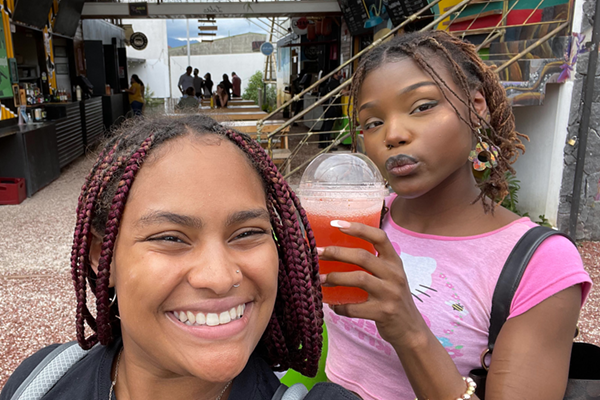
Granada is a fairytale city known for its rich history, blend of cultures,
and wonderful surroundings. This unique student town combines
countless cultural events and a bustling night life with
multiple outdoor activities from hiking to lying on warm
Mediterranean beaches. Within a short walk you can be transported
from outdoor cafés and typical markets to the narrow
stoned streets of neighborhoods rich with culture or the
caves of the gypsy quarter made famous by flamenco lovers.
Granada Facts:
- Location of City: Southeastern Spain, 20 miles
away from the Sierra Nevada Ski resort and 30 minutes
from the coast
- Population of City: 238,300
- Why It's Special: Home to the Alhambra; located
between the Mediterranean and the mountains; university
town with youthful atmosphere
- Must Sees: Alhambra; Arab, Jewish and Gypsy quarters;
sunset at the Mirador of San Nicolas
|
 |
Airport Reception & Return
Students who arrive at the designated airport prior to
arrival cut-off time on the arrival day for their program
will be picked up at the airport and transferred to their
assigned housing. In addition, students leaving on the last
day of the program will also receive return transportation
their designated airport.
|
 |
Housing & Meals
All students will stay with a homestay family. All families
have been screened by our local resident staff and have
been carefully chosen to ensure the best possible living
arrangements. Staying with a family is a great way to complement
your classroom study, as you have the opportunity to practice
your language skills and learn about the Spanish culture.
|
 |
Tuition & Fees
The CEA program price covers the cost of standard tuition
and registration fees at your host institution. Tuition
includes the courses indicated in the program.
|
 |
College Credit
An official transcript from the University of New Haven
will be issued at the end of your CEA program. The amount
of credit awarded is at the discretion of your home school.
|
 |
Medical Insurance
CEA Insurance through HTH Worldwide is included in your
program cost. This comprehensive medical insurance plan
covers a maximum of $250,000 for any illness or accident
abroad and does not carry a deductible. Coverage includes
most medical expenses, emergency evacuation and a full range
of 24-hour medical assistance.
|
 |
Onsite Orientation
CEA will provide you with helpful resources and advising
before you leave home. Once you arrive at your program destination,
CEA will hold an in-depth group orientation, where you will
explore your new host city, as well as learn more about
local customs, extracurricular activities, CEA policies,
and health and safety information. In addition, you will
have the opportunity to get to know other CEA participants
as you begin to adjust to life in your new environment.
|
 |
Resident Staff
CEA has an experienced and friendly staff to ensure that
you have a positive study abroad experience. From securing
housing and planning activities to providing academic support
and cultural counseling, the resident staff are available
to help you make a smooth transition into your new culture
and educational environment.
|
 |
Excursions
As part of your CEA experience, you will receive at least
two day trips to locations outside your program destination.
These excursions are designed to give you a more in-depth
look into the landscape and culture of your host country.
All transportation and entrance fees are included.
|
 |
Immersion Activities
CEA resident staff plan activities throughout the week,
designed to help introduce you to local customs, culture
and people, as well as to help you explore your new city.
Activities may vary weekly and some may require an additional
fee.
|
| |
Back to top
|
Eligibility
- Participants must be currently enrolled in a US High
School
- Age: Participants must be at least 16 years of
age by the program start date
- GPA: 2.5 (4.0 Scale)
- Language Level: Participants must have taken at least
1 year of High School Spanish
|
| |
| Session |
Dates* |
Price |
| There are no active programs at this time. Please check back for updates. |
*Contact
CEA to verify program dates prior to purchasing airfare. |
Academic Focus
The Spanish Language Studies program is designed for students of all
language levels who are interested in improving their language
skills. Your courses will focus on listening, speaking,
reading and writing. All students will take a placement
exam upon arrival to determine their language level. You
will be in class with other US and international students.
Classes meet for four hours in the morning, Monday through Friday. At
the end of your four week session, you will have participated
in 80 hours of coursework, which is generally worth 5 semester
credits in the US university system. Students participating
in the July 2-Week session will complete 40 hours of coursework,
which is generally worth 3 credits in the US university
system. Please refer to the Courses
& Credits tab for specific course descriptions.
Housing
All CEA students will live in a homestay. Homestays may consist of a
single señora (with or without children) or a traditional
two-parent household. This housing option allows students
to continue practicing Spanish outside of the classroom
while learning about Spanish culture. In most cases, students
will stay in a double room with another CEA participant.
All families are welcoming and generous with their home,
but participants should remember that they are guests and
will be expected to adapt to the traditions and rules of
their homestay.
You will be provided three meals per day and laundry service
once a week. All homestays are located within Granada's
city center and are walking distance from classes.
Back to top
|
Itineraries
CEA resident staff plan activities each week to help students
become more familiar with their host city and surrounding
area, as well as introduce them to the local culture. Itineraries
will be finalized several months prior to the program start
date; however, we have included below what typical program
activities and excursions will include:
Excursions
Students will receive at least two day trips during the
four week sessions and one day trip during the two week
session. We have described some of the excursion opportunities
that may be offered during your session.
 |
Málaga
Málaga is the major coastal city of the Costa
del Sol. Students will visit the castle overlooking
Málaga which was originally Phoenician, La
Alcazaba, a fortress which dates back to 1065 and
is now a fascinating archaeological museum. Students
will also visit the Pablo Picasso museum, which has
an extensive selection of works by the artist from
the private collections of Christine Ruiz-Picasso,
the widow of Picasso's son Paul, and their son, Bernard.
|
 |
Seville
Seville is the capital city of Andalusia, Spain's most
southern province, and home to the world's largest Gothic
cathedral. Students may visit the Alcazar (a 14th century
Moorish palace), the Maestranza (Seville's world famous
bull ring), or relax in a paddle boat in the beautiful
María Luisa park.
|

|
Córdoba
Once the vibrant capital of Muslim Spain, Córdoba
is home to the Mesquita, one of the world's largest
and oldest (1200 years old) mosques. Students take a
walking tour of the winding streets, admiring the balconies
decorated with colorful flowers and white washed patios.
The old Jewish quarter introduces the 1315 synagogue,
one of the only three left in Spain. |
 |
Nerja
Nerja is often considered the most beautiful spot in
Costa del Sol. The weather is pleasant in this region
of southern Spain and a trip to the beach is very comfortable
from March to November. Students are often impressed
by the enormous caves of Nerja, whose 20,000 year old
wall paintings are indicative of a prehistoric population. |
 |
Gibraltar
As the southernmost point in Europe, Gibraltar is the
exact point where the Atlantic Ocean and the Mediterranean
sea meet and on a sunny day Africa is visible across
the water. This small English colony is also host to
a colony of monkeys. |
Immersion Activities
Below is a sample of the types of activities that students
may experience during their program.
Chocolate con Churros
Students enjoy chocolate con churros with local Spanish
students where they can practice their Spanish.
Tea House at the Albaycin
Having tea with typical Arab pastries at the Albaycin transports
students to a Middle Eastern atmosphere and provides them
with a better understanding of the culture of southern Spain.
Tapas
Granada is famous for its tapas and there is a variety of
places at which to enjoy them. CEA will organize a tapas
night during which students can sample several delicious
treats.
Flamenco at the Zambras
The Zambras are the caves in which Flamenco shows are held,
located in the Sacromonte, the unique gypsy neighbourhood
facing the Alhambra.
Arab Baths
Water is essential for the Arab culture. Students learn
the meaning of the Arab Bath ritual where the murmur of
water intermingles with a peaceful atmosphere and the simple
refinement inherited from Al-Andalus.
Back to top
|
Courses & Credits
University of Granada
Students will take classes at the University of Granada's
Modern Language Center, Centro de Lenguas Modernas, established
in 1992. It is located in the historic and central Realejo
neighborhood, in the ancient Palace of Santa Cruz (16th
century) and in a charming modern palace called the Huerta
de los Ángeles (early 20th century). The Centro accommodates
in these two buildings approximately 10,000 Spanish and
international students. Faculty includes both specialists
in language instruction as well as University professors
and lecturers.
Grades & Transcripts
Students who successfully complete their program will receive
an official transcript from the University of New Haven
(UNH). Additional details about the transcript process will
be available in the upcoming weeks.
Course Descriptions
Beginner A | Beginner
B | Intermediate A | Intermediate
B
| Level |
Description |
| Beginner A |
Conversation: The focus of this course will
be on topics such as material necessities, daily life,
emotions, and personal opinions. Students will learn
how to communicate feelings and invitations, identify
and describe people, places and objects, organize
their speech, and use the correct language in social
situations. Students will also learn to compare and
contrast and to express likes, interests, agreement
and disagreement.
Grammar: The grammar component will cover
the alphabet, spelling, pronunciation, the forms of
the infinitive in the three conjugations, definite
and indefinite articles, present indicative of the
most frequently used regular and irregular verbs,
the difference between ser, estar, and haber, gender
and number agreement, reflexive and possessive pronouns,
and compound sentences.
|
| Beginner
B |
Conversation: The focus of this course will
be on topics such as material necessities, daily life,
emotions, and personal opinions. Students will learn
how to communicate feelings and invitations, identify
and describe people, places and objects, organize
their speech, and use the correct language in social
situations. Students will also learn to compare and
contrast and to express likes, interests, agreement
and disagreement.
Grammar: The grammar component will cover
the forms of the indefinite articles (uno, otro, ningún,
ninguno/a) as well as the uses of prepositions a and
en, in spacial relations. Action verbs with prepositions,
forms and uses of the present participle, forms and
syntax of gustar, encantar, and interesar will also
be reviewed. The course will also cover the uses of
estar for location and the basic contrasts between
ser and estar for description. Students will be introduced
to the preterit perfect, words that mark time (hoy,
últimamente, este mes/año, el próximo,
el mes/año que viene, dentro de), markings
of frequency (alguna vez, varias veces, muchas veces,
nunca), times of the day, days of the week, months,
seasons, and uses of the present with reference to
the future, ir a + infinitive, pensar + infinitive.
Basic contrasts of pronunciation between Latin American
Spanish and the Spanish of Spain will be discussed.
Other topics include exclamatory sentences, positive
imperative, and expression of reasons and excuses
(como, porque, lo que pasa es que).
|
| Intermediate
A |
Conversation: Students will learn to understand
the main idea and some essential details of conversations
among native Spanish speakers about subjects familiar
to the student. The course will review public announcements
and media news briefs. Students will learn to express
themselves in simple tenses and to convey general
opinions about familiar topics. Students will practice
speaking in the past tense (referring to a specific
moment in time, referring to an amount of time, relating
two occurrences in the past, talking about habits
and their frequency in relation to the present, and
describing events). Students will also learn to express
opinions, speak about the future and recount statements.
Grammar: The grammar component will cover
vocabulary related to personal experience and characteristics
and geographical descriptions. The basic functions
of ser and estar, the uses of the imperfect tense,
and the indefinite and the perfect indicative tenses
will be introduced. The syntax of comparative structures
and the tools used for identification will be covered.
Possessive adjectives and pronouns will also be introduced.
Skills to tell time: Hace/Hacía + amount of
time (que) and to narrate in the past will also be
covered.
|
| Intermediate
B |
Conversation: Students will learn to understand
the main idea and some essential details of conversations
among native Spanish speakers about subjects familiar
to the student. The course will review public announcements
and media news briefs. Students will learn to express
themselves in simple tenses and to convey general
opinions about familiar topics. Students will practice
speaking in the past tense (referring to a specific
moment in time, referring to an amount of time, relating
two occurrences in the past, talking about habits
and their frequency in relation to the present, and
describing events). Students will also learn to express
opinions, speak about the future and recount statements.
Grammar: The grammar component will introduce
the construction of the future, future perfect, and
present subjunctive tenses and the basic uses of the
conditional. The transformation of the imperative,
the present indicative, the subjunctive, the future,
the indefinite and the perfect tenses will also be
covered. The course will go over the use of the subjunctive
in expressing wishes and/or necessity will be introduced.
Students will be introduced to vocabulary and expressions
to evaluate facts and to congratulate, thank, invite,
express wishes, and praise.
|
Course descriptions for the Advanced and
Superior levels are available upon request. Please contact
CEA for further information.
Back to top
|
|